Vivo is about to give its smartphone software a fairly big makeover. The company has confirmed that OriginOS 7 Launches on September 16, bringing Android 17 along with a redesigned interface and several changes that we haven’t seen yet.
While OriginOS 7 has a strong visual focus, Vivo isn’t stopping at a new coat of paint. Vivo is also talking about smoother performance, improved multitasking, better storage management, and more ways to personalize the phone.
The interface is getting a glass-inspired makeover
The most obvious change in OriginOS 7 will be the user interface.
Vivo is moving toward a more transparent, glass-like design, with translucent elements and softer visual effects appearing throughout the system. The new approach should make menus, panels, and other parts of the interface feel less static than before.
Vivo also appears to be giving users some control over these effects. That means people who prefer a cleaner interface may be able to tone things down, while those who like the new look can make the glass effect more noticeable.
More things to do with the lock screen
The lock screen is getting some attention too.
OriginOS 7 will come with Liquid Themes, which are designed to add more visual depth to wallpapers and the lock screen. Vivo is also expanding its emoji and sticker options, giving users another way to customize user interface.
The ability to create stickers from photos could be a nice addition for those users who like personal touches without relying entirely on pre-made themes.
Atomic Workbench aims for easier multitasking
For people who use their phones for more than just social media and messaging, Atomic Workbench could be one of the more interesting additions.
The feature is designed around multitasking and brings some ideas from larger-screen devices to regular smartphones. It should make working with multiple apps more convenient, although the actual experience will depend on the device and the apps being used.
It’s a practical direction for Vivo, especially as phones are increasingly being used for work and productivity.
Vivo is also working on everyday performance
A redesigned interface is nice, but it means little if the phone starts feeling slower. Vivo seems to be aware of that.
With OriginOS 7, the company has made changes to the system architecture and rendering process. Vivo has focused to improvements in areas such as graphics, page transitions, and app startup times etc.
For everyday use, these changes should translate into quicker interactions and take a fewer moments where the interface feels like it’s catching up with the user.
Storage management gets an upgrade
Another change that could matter more over time is Storage Compression 2.0.
Modern phones can fill up quickly, even when users aren’t storing huge amounts of video or photos. System files and application data gradually take up more space, leaving less room for the things users actually want to keep.
Vivo’s new compression technology is designed to reduce some of that storage overhead. If it works as promised, users could get a little more usable space without deleting their apps or personal files.
Android 17 forms the foundation
Of course, the biggest platform-level change is the move to Android 17.
Vivo is combining Google’s latest Android foundation with its own OriginOS features and interface. That gives the company an opportunity to improve not only the appearance of its phones but also how the system handles resources and everyday tasks.
More details about the Android 17 features included in OriginOS 7 should become available once Vivo officially presents the software.
When will OriginOS 7 be available?
Vivo will officially introduce OriginOS 7 on 16 th September 2026, during its Developer Conference.
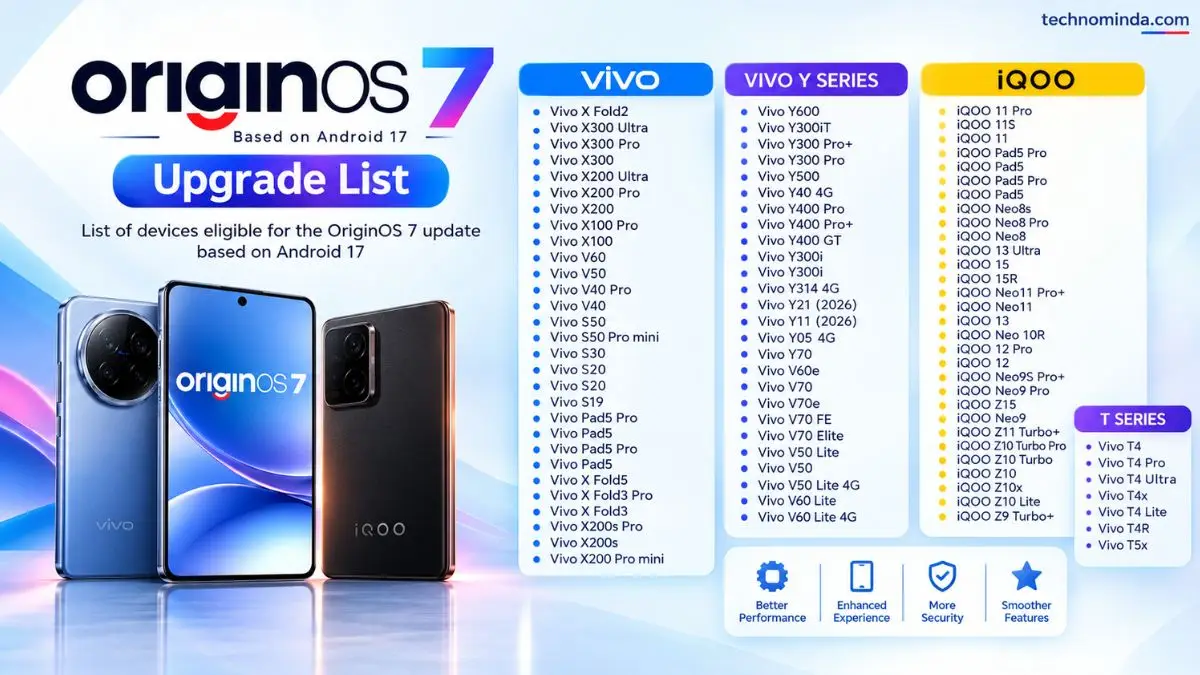
In this event vivo should provide a clearer picture of which Vivo and iQOO models are eligible for the update and when users can expect the rollout to begin. For the international users, global release timeline will be especially interesting, as software availability can differ between the Chinese and global versions of Vivo phones.
The bigger picture
OriginOS 7 looks like more than a routine Android version update. Vivo is changing the visual identity of the software while also trying to make the underlying experience faster and more efficient.
The new interface will probably attract the most attention at first, but features such as Atomic Workbench and Storage Compression 2.0 could end up being more useful in everyday use.
We’ll have a much clearer idea of what Vivo has actually achieved when OriginOS 7 officially makes its debut on September 16.